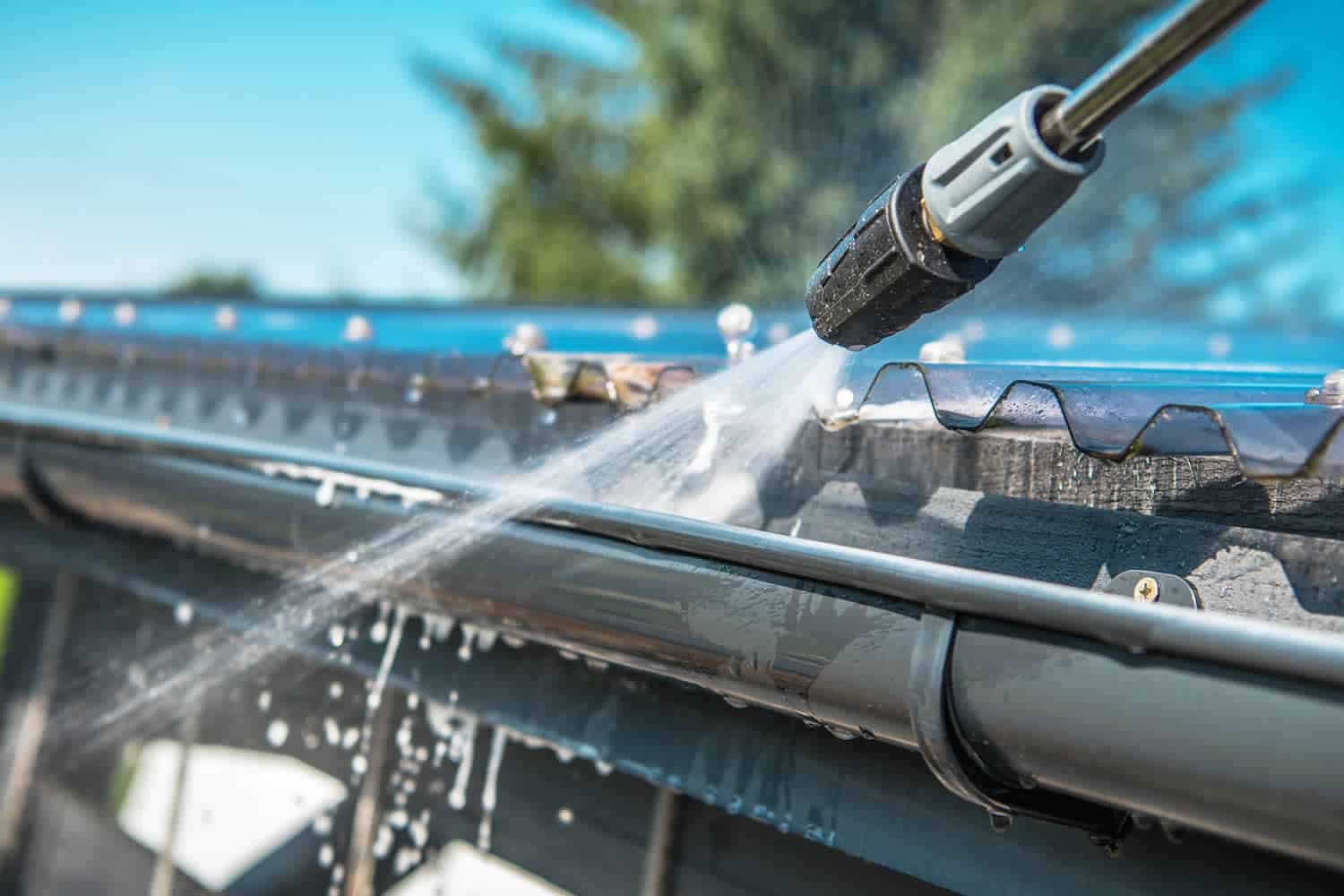
Dealing with issues like a leaking gutter joint can frustrate and overwhelm homeowners. Not only can a leaking gutter joint damage your home’s foundation, but it can also lead to costly repairs if not addressed promptly.
A leaking gutter joint, also known as a “gutter union,” can be a real nuisance, especially if it’s in a spot where it keeps dripping onto you or pooling right outside your door. Leaks in your guttering system can even cause much bigger problems. A constant flow of water over the edges of your gutters can lead to issues with dampness, rot, and potential structural damage to your property. That’s why staying on top of gutter cleaning and maintenance is crucial.
One of the most common causes of leaks in guttering is a failed joint or union, where two sections of guttering meet. Over time, these joints can become loose, cracked, or worn out, allowing water to escape. Regular gutter cleaning can help identify these problems before they become significant issues. Professional gutter cleaners will be able to spot any signs of wear and tear or potential weaknesses.
If you notice a leak coming from a gutter joint or union, it’s essential to address it immediately. Depending on the severity of the issue, it may be possible to reseal or repair the joint using a gutter sealant or repair kit. However, in some cases, the entire section of guttering may need to be replaced to ensure a watertight seal.
What causes a leaking gutter joint?
A leaking gutter joint is a common issue that can lead to significant water damage if left unaddressed. The joints in a gutter system are the points where two sections of the gutter meet, and they are susceptible to leaks for several reasons.
One of the primary causes of a leaking gutter joint is improper installation. If the joints are not adequately sealed or secured, water can seep through the gaps and cause leaks. Over time, the sealant used to join the gutter sections can deteriorate, leading to cracks and openings where water can escape.
Another factor that can contribute to leaking gutter joints is the age of the gutter system. As gutters age, they can become brittle and prone to cracking, especially at the joints. This is particularly true for older gutters made of materials like aluminium or galvanised steel, which can corrode over time.
Additionally, debris accumulation in the gutters can pressure the joints, causing them to separate or crack. Leaves, twigs, and other organic matter can build up in the gutters, creating blockages that force water to back up and overflow at the joints.
Temperature fluctuations can also play a role in causing leaking gutter joints. During the winter, water can freeze inside the gutters, causing them to expand and stress the joints. This can lead to cracks or separations, allowing water to leak through when the ice melts.
It is essential to have your gutter system professionally installed and maintained to prevent leaking gutter joints. Regular cleaning and inspection can help identify potential issues before they become significant problems, and timely repairs or replacements can ensure the integrity of your gutter system.
How to fix a leaking gutter joint
To fix a leaking gutter joint, start by identifying the source of the leak. Inspect the area for any cracks, gaps, or holes in the joint, and clean it thoroughly using a brush or rag to remove any debris or dirt causing the leak.
Next, apply a waterproof sealant to the leaking gutter joint. Choose a sealant specifically designed for gutters, follow the manufacturer’s instructions, and allow it to dry completely before testing for leaks again.
If the sealant doesn’t fix the leak, you may need to replace the damaged section of the gutter. Measure the length of the gutter that needs to be replaced, purchase a new section from a hardware store, carefully remove the damaged section, and install the new one according to the manufacturer’s instructions.
After fixing the leaking gutter joint, regularly inspect your gutters for any signs of damage or wear and tear. Clean your gutters at least twice yearly to prevent clogs and ensure proper drainage. Staying proactive with your gutter maintenance can help prevent future leaks and protect your home from water damage.
How do you fix guttering that’s come loose?
The first step in fixing loose guttering is to identify the cause of the problem. Clogged gutters, broken brackets or screws, or foundation settling are just a few causes of loose guttering. Once you’ve identified the reason, you can proceed with making repairs. If your gutters are clogged, clear out any debris and ensure water can flow freely through the system.
Next, check for any damaged brackets or screws that may be causing the guttering to come loose. If you notice any loose brackets or screws, tighten them using a screwdriver or drill. If the brackets are damaged beyond repair, you may need to replace them with new ones. Make sure to use sturdy materials designed for outdoor use to ensure that your repairs last.
If the issue is due to the foundation settling, you may need to adjust the pitch of your gutters so that water flows away from your home correctly. This may require trial and error, so be patient as you adjust until you find the right angle for optimal drainage. You may also want to consider installing additional downspouts or extensions to help divert water away from your home’s foundation.
Sometimes, it may be necessary to call in a professional for help fixing loose guttering. If you’re uncomfortable working at heights or the problem seems too complex for DIY repairs, don’t hesitate to contact a local roofing or guttering specialist for assistance. They will have the tools and expertise to quickly and effectively address any issues with your gutters.
How to fix gutters that leak at the end
Gutters commonly experience leaks at the end caps, which are intended to seal off the ends of the gutter run, preventing water from spilling out. However, they can become dislodged, cracked, or worn out, leading to leaks. Fortunately, fixing leaky end caps is a task that most homeowners can handle themselves.
First, inspect the end caps closely for cracks, holes, or any signs of damage causing the leak. If the end cap is severely damaged, it may need to be replaced entirely. However, in many cases, a simple repair will suffice.
If the end cap is still in good condition but has become dislodged, you can try resealing it with a high-quality gutter sealant. Carefully clean the area around the end cap, removing any debris or old sealant, and then apply a generous amount of sealant around the edges of the end cap to ensure a tight seal.
If the end cap is cracked or has a small hole, you can try patching it with a gutter repair kit. These kits typically include a waterproof sealant or epoxy that can fill in the gaps and cracks, effectively sealing the leak.
Sometimes, the issue may not be with the end cap itself but with the gutter run. If the gutter is sagging or has low spots, water can accumulate and eventually overflow at the end cap. In this situation, you may need to adjust the gutter slope or install additional hangers to ensure proper drainage.
Regular maintenance and inspecting your gutters can help prevent leaks at the end caps and other issues. It’s a good idea to clean your gutters at least twice a year, removing any debris that could impede water flow. Additionally, look for any signs of damage or wear and address them promptly to avoid more significant problems.
How to fix gutters that overflow
Gutters protect your home’s foundation and exterior walls from water damage. However, when they become clogged or damaged, they can cause water to overflow, leading to many problems. Overflowing gutters can result in water seeping into your basement, eroding the soil around your home’s foundation, and causing unsightly stains on your exterior walls. Fortunately, there are several steps you can take to fix this issue and prevent further damage.
First, it’s essential to identify the cause of the overflow. In most cases, the culprit is a buildup of leaves, twigs, and other debris that prevents water from flowing freely through the gutters. To address this, you’ll need to clean out the gutters thoroughly, remove any obstructions, and ensure that the downspouts are also evident.
If the gutters are old or damaged, it may be necessary to replace them entirely. Look for signs of cracks, rust, or sagging sections, which can effectively compromise the gutters’ ability to channel water away from your home.
Another potential cause of overflowing gutters is improper slope or pitch. Gutters should be installed with a slight slope towards the downspouts to facilitate water flow. Water can pool and eventually overflow if the slope is insufficient or uneven. In such cases, you may need to adjust the gutter pitch or consider installing additional downspouts to improve drainage.
Lastly, it’s essential to maintain your gutters regularly to prevent future overflows. This includes cleaning them out at least twice a year (ideally in spring and fall) and inspecting them for any signs of damage or deterioration. By taking proactive measures, you can ensure that your gutters continue to function optimally, protecting your home from water damage and saving you from costly repairs.
How much does sealing gutter joints cost?
Sealing the joints of your home’s guttering system is essential for maintaining its integrity. As time passes, the sealant used to connect the individual sections of gutters can degrade, leading to leaks and potential water damage. It is crucial to address this issue promptly. But how much does sealing gutter joints cost?
The cost of sealing gutter joints can vary depending on several factors, including the size of your property, the accessibility of the gutters, and the type of sealant used. On average, homeowners in the UK can expect to pay between £150 and £300 for a professional gutter sealing service.
Labour costs typically comprise a significant portion of the overall expense, as cleaning, preparing, and sealing the gutter joints requires skill and experience. Depending on the job’s complexity, professionals may charge an hourly rate or a fixed fee.
The cost can also be influenced by the type of sealant used. Silicone-based sealants are generally more expensive but offer superior durability and resistance to weathering. Cheaper options, such as butyl rubber sealants, may be more cost-effective in the short term but require more frequent reapplication.
Neglecting gutter joint sealing can lead to more significant and costly repairs down the line. Leaks can cause water damage to your home’s exterior, foundation, and even interior walls and ceilings. In some cases, the cost of repairing water damage can far exceed the cost of preventative gutter sealing.
When considering the cost of sealing gutter joints, consider the long-term benefits of protecting your home from water damage and ensuring the efficient functioning of your guttering system.
Are you looking for Gutter Cleaning in Reading? Look no further. Contact us at Abacus Window Cleaning to ask about our gutter cleaning service.