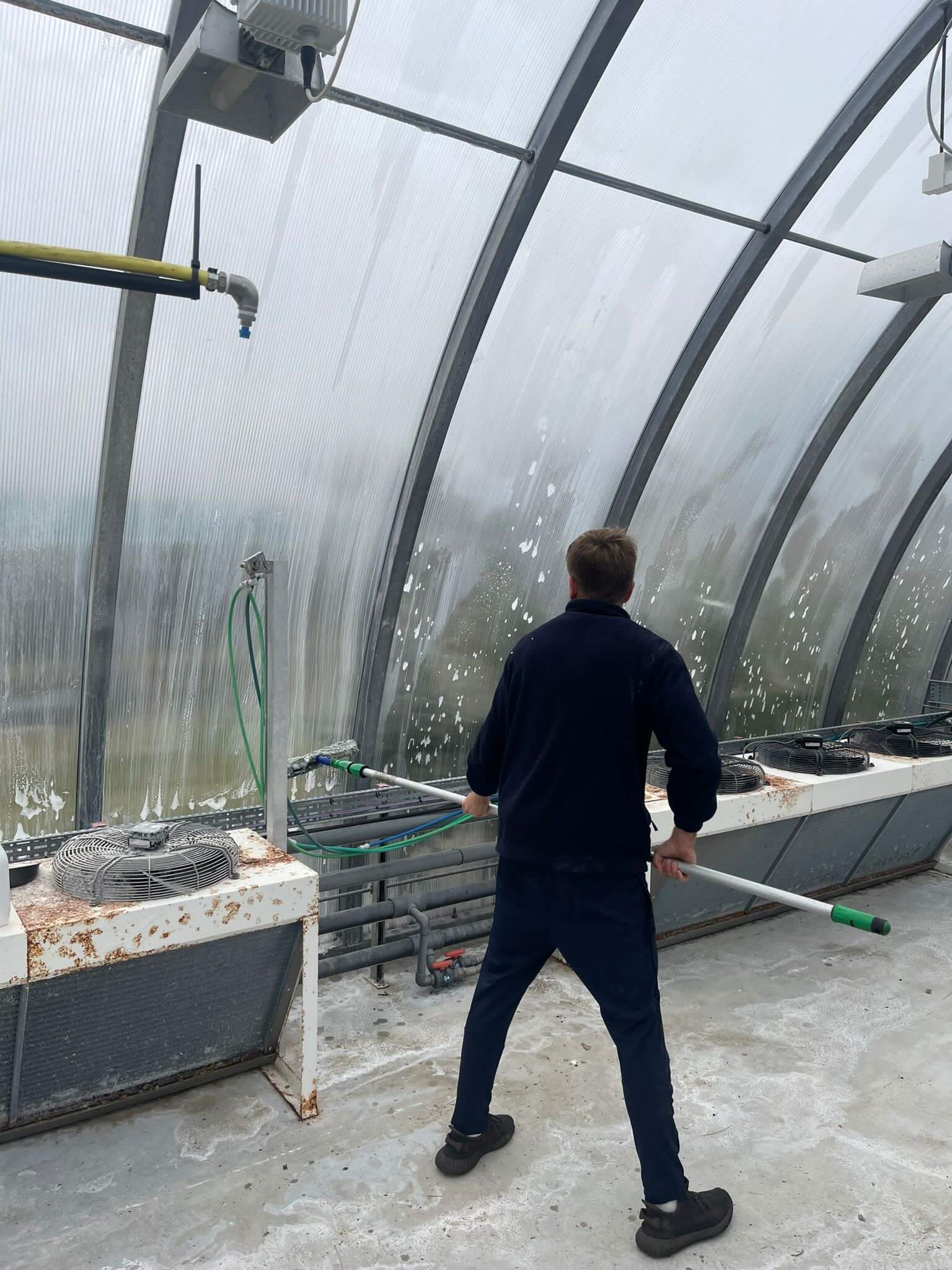
It is frustrating to have your windows cleaned, only for them to appear marked again after the next spell of rain. This often leads people to assume that rainwater is dirty or that the windows were not cleaned properly.
In most cases, rain alone is not the real cause. The problem is usually the dust, pollen, traffic film and other residue already sitting on the glass, frames, brickwork or roof above the window. When rain mixes with these deposits, it carries them across the pane and leaves visible spots or streaks as the water dries.
Understanding why this happens can help you keep your windows cleaner for longer and identify when the marks are caused by something other than ordinary rain.
Does Rain Make Windows Dirty?
Clean rainwater does not usually make clean glass noticeably dirty. Rain becomes a problem when it picks up contaminants from the air or surrounding parts of the building.
As water runs down a window, it may collect:
- Dust from the glass and frames
- Pollen from nearby plants and trees
- Traffic pollution
- Bird deposits
- Dirt from window seals
- Residue from brickwork and render
- Debris from gutters and roof edges
- Salt or mineral deposits
The water then dries on the pane, leaving the collected dirt behind.
This is why windows can look clean during rainfall but develop spots and streaks once the weather clears.
Dust and Pollen Stick to Wet Glass
Even windows that appear reasonably clean can have a thin layer of dust across the surface. This may be difficult to see until rainwater spreads it around.
Pollen can be particularly troublesome during spring and summer. Fine yellow or green particles settle on windows, frames and sills. When it rains, the pollen mixes with the water and forms cloudy trails across the glass.
Properties near parks, gardens, hedges and mature trees may experience this more frequently. Windows close to busy roads can develop similar marks from traffic-related dust.
The longer these deposits remain on the glass, the more visible the streaking may become after rain.
Dirty Window Frames Can Affect Clean Glass
The glass is not always where the dirt originates. Window frames, seals and vents can hold a surprising amount of grime.
When rain runs over a dirty upper frame, it carries some of that residue down onto the pane. This can leave dark drips or vertical streaks, particularly near the corners.
The problem is more noticeable on:
- White uPVC frames
- Older timber windows
- Deep window reveals
- Frames beneath vents
- Windows with deteriorating rubber seals
- Glazing positioned below overhanging brickwork
A thorough professional clean should normally include accessible exterior frames and sills, rather than concentrating only on the glass. Keeping these surrounding surfaces clean reduces the amount of dirt that can wash back onto the pane.
Traffic Film Can Cause Grey Streaks
Homes and businesses near busy roads often experience a fine grey film across their windows. It consists of dust, pollution and tiny airborne particles generated by vehicles and general urban activity.
The layer can be difficult to notice when it is evenly spread. After rainfall, however, the residue moves across the glass and dries unevenly. This creates visible spotting, cloudy patches and streaks.
Ground-floor windows, shopfronts and panes facing main roads are often affected most heavily. They may need cleaning more frequently than windows on quieter elevations of the same property.
Rainwater Can Carry Dirt From Above
Marks may also come from parts of the building above the window.
Rain can wash contaminants from:
- Roof tiles
- Gutters
- Fascias
- Soffits
- Exterior walls
- Window ledges
- Render
- Cladding
- Overhead balconies
If a gutter is overflowing, dirty water may splash directly onto the windows below. Leaking joints and blocked downpipes can create similar problems.
Brown or green trails may indicate that the water has passed through decaying leaves, moss or algae before reaching the glass. In these cases, cleaning the window alone will not solve the underlying issue.
The guttering or roofline may also need attention.
Hard Water Can Leave White Spots
Not every mark that appears after wet weather is caused by ordinary dirt. White spots or cloudy mineral deposits can form when water containing dissolved calcium and magnesium dries on glass.
This is more commonly associated with tap water, sprinklers and leaking pipework than rainfall. However, rainwater may collect minerals and residue as it runs across masonry or other building surfaces.
Fresh water marks can often be removed during normal cleaning. Older deposits may bond more firmly to the glass and require specialist treatment.
Repeated exposure can eventually cause permanent etching, so hard-water staining should not be ignored.
Why Windows Sometimes Look Worse in Bright Sunshine
Rain marks are often less noticeable during dull weather. Once the sun comes out, light reflects through dried droplets and streaks, making them much easier to see.
Low morning or evening sunlight can be particularly revealing. It highlights even small amounts of residue across the pane.
This does not necessarily mean that the window suddenly became dirtier. The change in lighting has simply made existing marks more visible.
Large panes, bi-fold doors, roof lanterns and conservatory glazing tend to show this effect more strongly because sunlight passes through a greater area of glass.
Does Rain Affect Purified-Water Window Cleaning?
Professional water-fed pole systems use purified water from which dissolved minerals have been removed. The windows are brushed, rinsed and then left to dry naturally.
It is normal for the glass to remain wet after the cleaner has finished. Because the rinse water contains very few dissolved minerals, it should dry without the spotting associated with ordinary tap water.
Problems can occur if dirt remains trapped around the frames, vents or seals. Rain may later wash this residue back onto the glass. For this reason, the first clean at a heavily soiled property can take longer than routine maintenance visits.
Windows that have been cleaned regularly are generally easier to maintain because less dirt is available to be redistributed by rain.
Can Windows Be Cleaned While It Is Raining?
Professional window cleaning can often continue during light rain. The quality of the result depends more on the cleaning method and the condition of the glass than on a few raindrops.
Light rain does not usually prevent purified-water cleaning from working correctly. The glass will already be rinsed and left to dry naturally.
Work may need to be postponed when there is:
- Heavy rainfall
- Strong wind
- Lightning
- Ice
- Poor visibility
- Unsafe ground conditions
Safety and the ability to achieve a consistent clean should always come first.
How to Stop Windows Looking Dirty After Rain
You cannot prevent rain from reaching exterior glass, but you can reduce the amount of residue it moves around.
Arrange regular window cleaning
Regular cleaning prevents heavy layers of dust, pollen and pollution from accumulating. Rain has less dirt to redistribute when the glass and frames are already being maintained.
Keep frames and sills clean
Cleaning the surrounding framework reduces dark drips and streaks. Pay particular attention to upper frame edges, vents, seals and corners.
Clear blocked gutters
Overflowing gutters can direct contaminated water onto the windows below. Gutter cleaning may be necessary if marks repeatedly appear beneath the roofline.
Trim nearby vegetation
Branches and dense planting can increase pollen, sap, bird activity and leaf debris around the windows. Sensible pruning may reduce the amount settling on the glass.
Check for leaks
Water running from damaged gutter joints, roof edges or pipework can cause persistent staining. Repairing the source is more effective than repeatedly cleaning the same mark.
Avoid rinsing with hard tap water
Using a garden hose can leave mineral spots, especially in hard-water areas. If you rinse windows yourself, dry the glass properly or use purified water.
Why Newly Cleaned Windows May Still Show Marks
Occasionally, marks become visible after cleaning because they are not surface dirt.
The glass may have:
- Fine scratches
- Mineral etching
- Failed seals
- Internal condensation
- Scratches from previous cleaning
- Damage from building materials
- Deteriorated window film
- Manufacturing imperfections
Cleaning can make these defects more obvious because the surrounding dirt has been removed.
If a cloudy patch remains in exactly the same place after several cleans, the issue may be within the glass unit rather than on the outside surface.
Condensation between double-glazed panes usually indicates that the sealed unit has failed. Exterior window cleaning cannot remove moisture trapped between the layers.
When Should You Call a Professional Window Cleaner?
Professional cleaning is worth considering when the windows are difficult to reach, heavily marked or repeatedly affected by rain streaks.
A window cleaner can assess whether the problem is caused by:
- General surface dirt
- Dirty frames
- Traffic film
- Organic residue
- Hard-water deposits
- Overflowing gutters
- Difficult access
- Permanent damage to the glass
Professional water-fed poles also make it possible to clean many upper-storey windows without ladders. This is particularly useful for panes above conservatories, garages, extensions and sloping ground.
Clean Glass Is Less Likely to Streak After Rain
Rain does not automatically make windows dirty. Most post-rain marks are created when water mixes with contaminants already present on the glass or surrounding building surfaces.
Dust, pollen, traffic residue and dirty frames are among the most common causes. Blocked gutters, roof runoff and mineral deposits can also contribute.
Keeping the windows, frames and nearby roofline clean gives rainwater less dirt to carry across the panes. Regular maintenance will not stop every droplet from showing temporarily, but it can significantly reduce the streaks and spotting left behind once the weather improves.