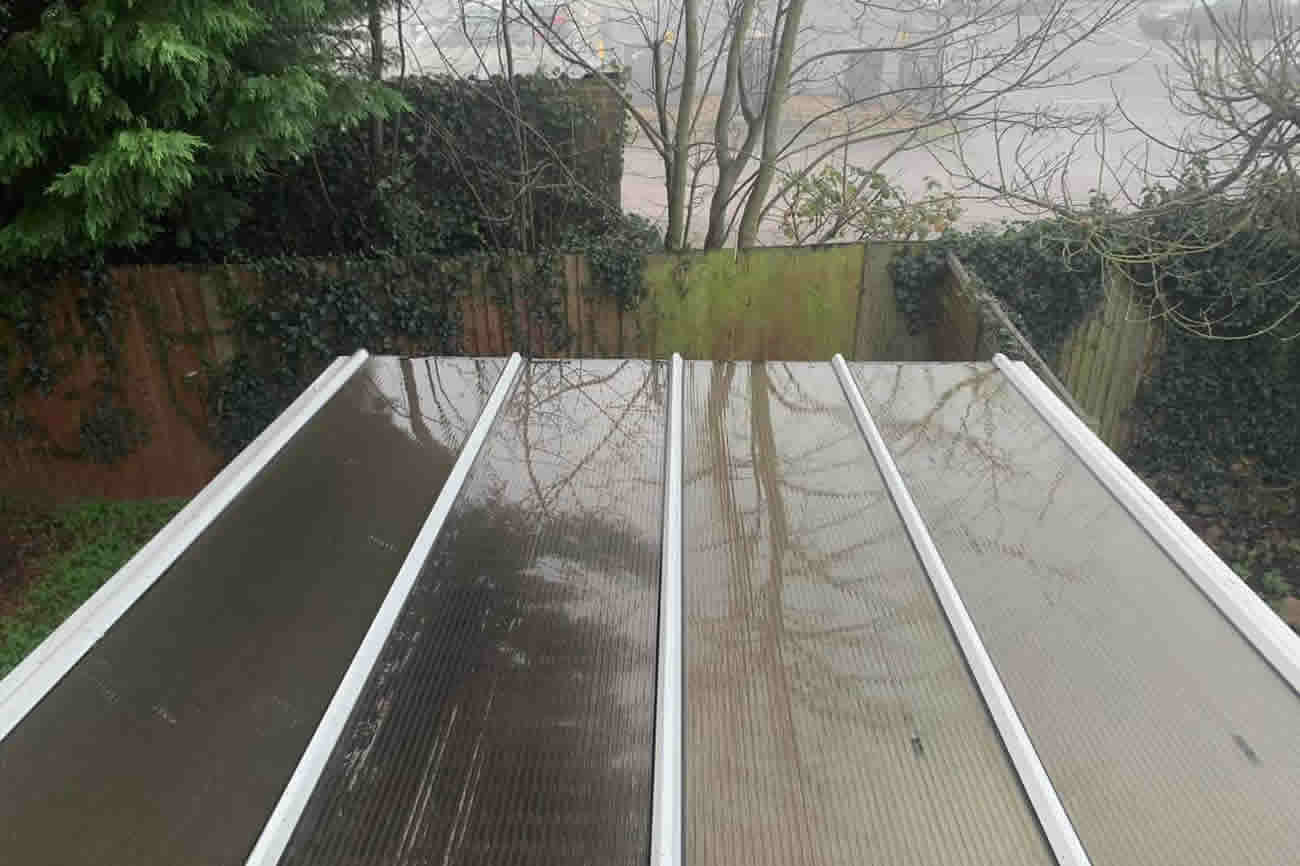
Spring is one of the best times of year to get the outside of your home cleaned, checked and brought back under control after months of wet weather, wind, frost, leaf fall and general winter grime. By the time March and April arrive, many properties have dirty windows, blocked gutters, green algae on frames, stained conservatory roofs, slippery paths, dull fascias and moss sitting in places it should not be. None of those issues always look urgent on their own, but together they can make a home look tired just as the brighter weather starts to show every mark.
The main exterior cleaning jobs to tackle in spring are window cleaning, gutter clearing, fascia and soffit washing, conservatory roof cleaning, patio and path cleaning, driveway cleaning, render washing, solar panel cleaning and a general check of high-level areas that may have collected debris over winter. You do not need to do every job at once, but spring is a sensible time to inspect the outside of the property and deal with the areas that affect appearance, drainage, safety and long-term maintenance.
For homeowners, spring cleaning outside the house is not only about making the property look better. It is also about preventing small maintenance problems from becoming more expensive later in the year. Blocked gutters can overflow into brickwork. Dirty frames can trap algae and staining. Slippery paving can become a fall risk. Conservatory roofs can hold moss, leaves and grime around seals. Windows can lose clarity because of pollen, road film and salt left behind from winter conditions. A planned spring clean puts the property in better shape before summer, garden use, outdoor entertaining and longer daylight hours.
Start With a Full Exterior Check
Before booking or carrying out any cleaning, walk around the outside of the property and look at it properly. Spring is a good time to spot things you may have ignored during winter because the weather was poor or the days were too short. Look at the windows, frames, doors, gutters, downpipes, fascias, soffits, conservatory roof, roof lanterns, paths, patios, driveways, external walls and any high-level glass. Take photos if you are asking a professional cleaner for a quote, because images often make it easier to assess access and condition.
Pay attention to where dirt is building up. Green staining around frames, black marks under gutters, moss on roof edges, overflowing downpipes, algae on north-facing walls, slippery paving and heavy streaking on windows can all point to jobs that should be prioritised. The areas that look worst are not always the most urgent, though. A stained patio may look unattractive, but a blocked gutter overflowing near a wall can cause more practical problems if it is ignored.
A simple spring exterior check should include:
- Window glass, frames, sills and doors
- Gutters, outlets and visible downpipes
- Fascias, soffits and bargeboards
- Conservatory roofs, roof lanterns and skylights
- Patios, paths, steps and driveways
- Render, brickwork and exterior cladding
- Solar panels and high-level glass
- Drainage channels, gullies and areas where water pools
This first check helps you decide what needs cleaning now, what can wait until summer, and what may need a specialist rather than a quick DIY clean.
Clean the Windows After Winter
Window cleaning is one of the most obvious spring exterior cleaning jobs because winter leaves glass looking dull. Rain, wind, condensation, traffic film, bird mess, pollen, cobwebs and general airborne dirt all collect on windows during the colder months. As soon as the sun gets stronger, smears and water marks become much more visible, especially on south-facing windows, patio doors and large panes of glass.
A professional spring window clean should usually include the glass, frames and sills, not just a quick wipe of the pane. Frames and sills collect dirt through winter, and if they are not cleaned, rain can pull that grime back onto the glass. This is one reason windows sometimes look dirty again quickly after a poor clean. Properly washing the surrounding frame helps the whole window stay cleaner for longer.
Spring is also a good time to reset your window cleaning schedule. If you left the windows over winter, the first clean may take longer because the cleaner has to remove built-up dirt from the corners, vents, seals and sills. Once that first clean is done, a four-weekly, six-weekly or eight-weekly maintenance schedule can keep the windows looking much better through summer.
For homes with extensions, bi-fold doors, garden rooms, orangeries or large patio glass, spring window cleaning can make a big difference to how the inside of the home feels. Clean glass lets in more natural light and improves the view into the garden, which matters more once you start using outdoor spaces again.
Clear Gutters Before Spring Rain Gets Heavier
Gutter clearing should be high on the spring maintenance list, especially if the property has trees nearby. Autumn and winter can fill gutters with leaves, moss, twigs, roof grit and general debris. When spring rain arrives, blocked gutters may overflow down walls, drip over entrances, stain render, soak fascias or cause water to collect where it should not.
A blocked gutter is not always obvious from the ground. Sometimes the only sign is water spilling over during rain, dark staining under a gutter line, damp patches near the top of a wall, plants growing from the gutter or a downpipe that does not seem to be draining properly. Spring is a sensible time to get gutters checked because it gives you time to fix problems before heavy summer storms and autumn leaf fall.
Gutter clearing is often best done before or alongside window cleaning. If the gutters are cleaned after the windows, debris or dirty water may mark the glass and frames again. Where possible, plan gutter clearing first, then wash fascias and windows afterwards so the finish looks cleaner.
For many homeowners, professional gutter clearing is safer than climbing ladders. Modern gutter vacuum systems and inspection cameras can remove debris from the ground in many cases, reducing the need for risky ladder work. If gutters are very high, awkward, damaged or fitted to an older property, access should be assessed carefully before work starts.
Wash Fascias, Soffits and Bargeboards
Fascias and soffits are easy to ignore because they sit above eye level, but they have a big impact on how clean the property looks. Over winter, they can collect algae, traffic film, cobwebs, bird mess and dirt washed down from the roofline. White uPVC fascias show this especially clearly, often becoming streaked, grey or green in shaded areas.
Spring is a good time to clean fascias and soffits because the work pairs naturally with gutter clearing and window cleaning. Once the gutters have been emptied, the exterior boards can be washed, then the windows below can be cleaned afterwards. Done in the right order, the whole front or rear elevation looks fresher rather than just the glass.
Fascia and soffit cleaning can also reveal early signs of maintenance problems. While cleaning, you may spot loose joints, cracked sections, sagging gutter brackets, blocked outlets or areas where water has been overflowing. That does not mean the cleaner is carrying out repairs, but it can help you notice issues before they become more serious.
If the property has older timber fascias, cleaning should be more cautious. Painted wood, flaking paint and soft timber need a gentler approach than modern uPVC. Aggressive pressure washing is not usually suitable for delicate roofline boards because it can force water into joints or damage finishes.
Clean Conservatory Roofs and Glass Extensions
Conservatories, orangeries, roof lanterns and glass extensions often look worse after winter. Leaves collect around roof bars, algae forms in shaded corners, moss gathers near seals, and rain marks make panels look cloudy. When spring sunlight returns, all of that dirt becomes much more visible from inside the room.
A conservatory roof clean can make a big visual difference because it restores light and makes the space feel more usable. It is also a practical job because debris sitting around seals and roof bars can hold moisture. Over time, that can contribute to staining, blocked drainage channels and general deterioration around the roof structure.
Conservatory roof cleaning should be done carefully. Many roofs are not designed to be walked on, and older polycarbonate panels can become brittle. A professional cleaner will usually work from the ground or from suitable access equipment using poles and soft brushes rather than standing directly on the roof. The method depends on the size, height, angle and condition of the conservatory.
Roof lanterns and skylights are similar. They collect grime quickly because they face upwards and catch rain, pollen, bird mess and roof runoff. If you have an extension with a roof lantern above a kitchen or living space, spring cleaning can noticeably improve brightness inside the room.
Clean Patios, Paths and Steps
Patios, paths and steps often become slippery through winter. Algae, moss and lichen thrive in damp shaded areas, especially on north-facing surfaces, under trees or where water drains poorly. By spring, these areas can look green, patchy and unsafe, particularly on smooth paving, stone steps, decking and shaded side paths.
Cleaning hard surfaces in spring makes the garden safer and more presentable before it starts being used regularly. It also helps remove the winter film that makes outdoor areas feel neglected. For patios used for seating, barbecues or family gatherings, a spring clean gives you a better starting point before furniture comes out of storage.
The correct cleaning method depends on the surface. Concrete and some block paving can often be pressure washed, but natural stone, older slabs, pointing, resin surfaces and delicate paving may need a more controlled approach. Too much pressure can damage joints, lift sand, mark stone or leave uneven stripes. In some cases, a soft wash or pre-treatment may be more suitable than blasting the surface aggressively.
After cleaning block paving, kiln-dried sand may need to be replaced between the joints. If you remove moss and weeds from the gaps without re-sanding, the paving can become less stable and more prone to movement. This is why patio and driveway cleaning should be treated as maintenance rather than just a quick visual tidy.
Clean Driveways and Parking Areas
Driveways collect oil marks, tyre dirt, algae, moss, leaf stains and general grime through winter. Spring is a sensible time to clean them because vehicles, rain and organic debris can leave the surface looking patchy. A clean driveway improves kerb appeal immediately, especially if the rest of the exterior is being cleaned at the same time.
Different driveway surfaces need different care. Block paving, concrete, tarmac, resin bound surfaces, gravel edges and natural stone all behave differently under pressure washing. A method that works well on one surface may damage another. Tarmac can be scarred by aggressive pressure. Resin surfaces can be affected by harsh chemicals or poor technique. Block paving may need re-sanding after cleaning. Natural stone may require a gentler process to avoid surface damage.
Spring driveway cleaning is also useful because it helps you inspect the surface. Once the dirt is removed, cracks, loose blocks, sinking areas, drainage problems and oil staining become easier to see. If you plan to reseal block paving or treat stains, spring and early summer often provide better weather windows than winter.
For homes with shared access, sloped drives or parking areas near public paths, safety matters. Dirty, algae-covered surfaces can become slippery, and poorly controlled pressure washing can push dirty water into neighbouring areas. A professional clean should consider drainage, runoff and where the loosened dirt will go.
Wash Render, Brickwork and Exterior Walls Carefully
Spring is a good time to look at exterior walls, especially rendered homes. Render can develop green algae, black streaks and atmospheric staining, particularly on shaded elevations or walls exposed to constant rain. Brickwork can also collect moss, dirt and staining around ledges, sills, air bricks and damp areas.
Render cleaning should be handled carefully because not all render is suitable for pressure washing. Modern coloured render, silicone render, monocouche render and painted finishes can be damaged by aggressive cleaning. In many cases, a soft washing approach is more appropriate, using controlled cleaning solutions and low-pressure rinsing rather than high-pressure blasting.
Brickwork also needs the right approach. Old pointing, soft bricks and heritage materials can be damaged if cleaned too harshly. If the property is older or has delicate masonry, avoid treating the wall like a driveway. Exterior wall cleaning should match the surface, the age of the property and the type of staining present.
For many homeowners, wall cleaning is not needed every year. However, spring is the right time to inspect it. If the wall is starting to show green growth, black streaking or staining beneath gutters, dealing with the cause early can prevent the property from looking increasingly weathered through the year.
Check and Clean Solar Panels
Solar panels can lose efficiency when they are covered in dirt, pollen, bird droppings, traffic film or lichen. Spring is a sensible time to inspect them because panels may have collected winter grime, and the brighter months are when you want them performing well. You may not need to clean solar panels frequently, but visible dirt or heavy bird mess should not be ignored.
Solar panel cleaning should normally be done with purified water and suitable soft brushes. Harsh chemicals, abrasive pads and tap water can cause problems. Walking on panels or using unsafe roof access is also risky. A professional cleaner with the right equipment can often clean panels from the ground or from safe access points, depending on the roof height and layout.
If your windows are being cleaned with purified water, it may be worth asking whether solar panel cleaning can be carried out at the same visit. Not every window cleaner offers it, and not every roof is suitable, but it can be a useful spring add-on where access is safe.
Solar panel cleaning is especially relevant for homes near trees, coastal areas, busy roads, farmland or places where birds regularly perch on the roof. A quick visual check from the ground can often show whether the panels need attention.
Remove Cobwebs, Bird Mess and High-Level Dirt
Spring is when high-level dirt starts to stand out. Cobwebs around soffits, bird mess on upper windows, debris on ledges and staining under rooflines all become more visible in better daylight. These small details can make a clean home look untidy even if the main windows and doors are in good condition.
High-level exterior cleaning is often best handled with water-fed poles or suitable access equipment. This allows awkward areas to be cleaned without unnecessary ladder work. Window frames, upper doors, porch glass, garage windows, roofline details and high sills can often be cleaned at the same time as the main windows.
Bird mess should be removed carefully because it can be acidic and may mark surfaces if left for too long. It is also unpleasant to clean from awkward areas without proper tools. If a property has repeated bird mess problems around upper windows, ledges or solar panels, regular cleaning may be better than waiting until it becomes heavy.
This type of detail cleaning is especially useful before summer events, garden use, family visits or putting a property on the market. Clean windows make a difference, but clean frames, sills and surrounding areas make the whole property look better maintained.
Tidy Exterior Doors, Garage Doors and Entrance Areas
Front doors, porches, garage doors and entrance areas get a lot of wear through winter. Rain splash, mud, cobwebs, hand marks, traffic film and leaf debris can make the entrance look dull. Spring is a good time to clean these areas because they affect first impressions more than many homeowners realise.
A proper entrance clean may include the front door, glass panels, side lights, porch roof, threshold, external handles, surrounding frame and nearby windows. If the property has a canopy or porch roof, this may collect algae, leaves and staining in the same way as a small conservatory roof.
Garage doors can also benefit from a wash, especially white or light-coloured doors that show grime. Care should be taken around seals, sensors, paintwork and electrical components. A gentle exterior clean is usually enough; aggressive pressure washing is not always suitable for garage doors because it can push water into gaps or damage finishes.
These smaller jobs pair well with window cleaning. Once the main windows are being cleaned, it often makes sense to include doors, porch glass and entrance glazing so the whole frontage looks consistent.
Clean Outdoor Furniture and Garden Glass
Once spring arrives, outdoor furniture, glass tables, balcony panels and garden room glazing often come back into use. These areas may have been left outside through winter or stored in sheds and garages. Either way, they usually need cleaning before they are used properly.
Garden glass can be harder to keep clean than people expect. Glass tables show water marks and smears, balcony panels collect dust and rain spots, and garden room doors often pick up fingerprints, pet marks and pollen. If the home has glass balustrades, they can quickly look cloudy or streaky unless they are cleaned properly.
Outdoor furniture cleaning is not always part of a window cleaner’s service, but it is worth including in your own spring checklist. Wash frames, check for mildew, clean cushions according to the manufacturer’s instructions and avoid using harsh chemicals on surfaces that may stain or fade.
Where garden rooms, summer houses or outbuildings have windows, include them in your spring exterior clean. They are easy to forget because they are separate from the main house, but dirty outbuilding windows can make the garden feel less cared for.
Plan the Right Order for Spring Exterior Cleaning
The order of cleaning matters. If you clean the windows first and then clear the gutters, you may end up with dirty water or debris on the glass. If you clean the patio before washing the walls above it, runoff may mark the paving again. Planning the sequence helps avoid repeating work.
A sensible order for spring exterior cleaning is usually:
- Clear gutters and remove roofline debris
- Wash fascias, soffits and high-level exterior areas
- Clean conservatory roofs, skylights and roof lanterns
- Wash exterior walls, render or cladding if needed
- Clean windows, frames, sills and doors
- Clean patios, paths, steps and driveways
- Finish with entrance areas, garden glass and touch-up details
This order is not fixed for every property, but the principle is simple: clean from the top down where possible. Deal with the dirty high-level jobs first, then finish with the areas people notice most at eye level.
If you are booking several professional services, ask whether they can be combined into one visit or planned in a sensible order. This may be more efficient and can sometimes reduce disruption.
What Spring Exterior Cleaning Jobs Should Be Left to Professionals?
Some spring cleaning jobs are easy enough for a homeowner to handle, especially low-level doors, garden furniture and accessible ground-floor glass. Other jobs are better left to professionals because of height, safety, equipment or surface risk.
Professional help is usually sensible for high windows, gutter clearing, conservatory roof cleaning, solar panel cleaning, roof lanterns, large areas of render, slippery paving, awkward driveways and commercial buildings. These jobs can involve working at height, using specialist equipment or choosing the right method for the surface.
DIY cleaning can also cause damage when the wrong method is used. Pressure washing delicate render, using harsh chemicals on frames, scraping glass incorrectly or climbing ladders without proper equipment can create more problems than it solves. A professional cleaner should understand the safest approach and know when a surface needs a gentler method.
The decision comes down to risk. If the job can be done safely from the ground with basic equipment, it may be fine to handle yourself. If it involves height, fragile surfaces, electrical equipment, large areas, heavy staining or uncertain access, professional cleaning is usually the safer choice.
Spring Exterior Cleaning Checklist
Use this checklist as a practical starting point when reviewing your property after winter.
| Area | What to check | Spring cleaning priority |
|---|---|---|
| Windows | Dirt, streaks, bird mess, dirty frames and sills | High |
| Gutters | Leaves, moss, overflow marks and blocked outlets | High |
| Fascias and soffits | Green staining, cobwebs and roofline dirt | Medium to high |
| Conservatory roof | Algae, moss, leaf debris and cloudy panels | High if visibly dirty |
| Roof lanterns and skylights | Rain marks, bird mess and reduced light | Medium to high |
| Patio and paths | Algae, moss, slippery areas and staining | High if slippery |
| Driveway | Oil marks, tyre dirt, moss and weeds | Medium |
| Render and walls | Green algae, black streaks and staining | Medium |
| Solar panels | Bird mess, pollen and surface grime | Medium |
| Entrance areas | Door glass, porch roof, handles and thresholds | Medium |
| Garden glass | Balustrades, tables and garden room windows | Medium |
Not every home needs every job each spring. A newer property with regular cleaning may only need windows, gutters and a light roofline wash. A shaded older property near trees may need more attention because algae, moss and debris build up faster.
How Often Should Spring Exterior Cleaning Be Done?
Most homes benefit from a proper exterior check every spring, but the cleaning frequency depends on location and exposure. Windows may need cleaning every four to eight weeks. Gutters are often checked once or twice a year, especially near trees. Conservatory roofs may need cleaning once or twice a year depending on shade, leaves and bird activity. Patios and paths may need annual or seasonal cleaning if they become slippery.
Properties near busy roads, trees, open fields, coastal air or heavy shade usually need more frequent cleaning. Road film, salt, pollen, algae and leaf debris all build up faster in those conditions. Homes with lots of glass, roof lanterns, conservatories, white uPVC or north-facing elevations also show dirt more quickly.
Spring is the best time to reset the property after winter, but it should not be the only time exterior cleaning is considered. A good maintenance plan might include spring cleaning, summer touch-ups, autumn gutter clearing and a winter safety check for slippery surfaces and drainage problems.
Why Spring Cleaning Improves Kerb Appeal
Exterior cleaning has a strong effect on kerb appeal because it changes the parts of the property people notice first. Clean windows, bright frames, clear gutters, washed fascias, tidy paving and a clean entrance make the whole home look better cared for. This matters whether you are staying in the property, preparing for guests, renting it out or getting it ready for sale.
Dirty exterior surfaces can make a home look older than it is. Green algae on frames, blocked gutters, stained render and slippery paths create the impression that maintenance has slipped. Spring cleaning reverses that impression quickly because the results are visible straight away.
If you are planning to sell or let a property, exterior cleaning should be done before photography and viewings. Clean glass improves natural light inside rooms, while clean paths, doors and roofline areas improve the first impression from outside. It is a relatively simple way to make the property feel better presented without major renovation work.
Get Help With Spring Exterior Cleaning
Spring is the ideal time to clean the parts of your property that winter has left dirty, stained or blocked. The most useful jobs usually include window cleaning, gutter clearing, fascia and soffit washing, conservatory roof cleaning, patio and path cleaning, driveway cleaning, solar panel cleaning and a general check of high-level glass and roofline areas.
Abacus Window Cleaning provides professional window cleaning and exterior cleaning services for homes, businesses and managed properties across Surrey, Berkshire and Hampshire. The team can help with regular window cleaning, one-off cleans, conservatory cleaning, roof lantern cleaning, gutter cleaning and other exterior maintenance jobs where safe access and the right equipment matter.
Call Abacus Window Cleaning on 01252 834238 for a free quote.
FAQs
What exterior cleaning jobs should be done in spring?
The main exterior cleaning jobs to do in spring are window cleaning, gutter clearing, fascia and soffit washing, conservatory roof cleaning, patio cleaning, driveway cleaning, render washing and solar panel cleaning. Spring is a good time to inspect the property after winter and deal with the areas that have collected dirt, moss, algae and debris.
You do not always need every job done at once. Start with the areas that affect drainage, safety and appearance, such as blocked gutters, dirty windows, slippery paths and heavily stained conservatory roofs. Other jobs can be planned around the property’s condition and budget.
Why is spring a good time for exterior cleaning?
Spring is ideal because winter weather often leaves properties dirty, damp and stained. Rain, frost, wind, leaves, moss and algae can build up across windows, gutters, patios, rooflines and exterior walls. Cleaning in spring gives the property a fresh start before summer use.
Brighter spring light also makes dirt more visible, especially on windows, patio doors and conservatory roofs. A spring clean improves kerb appeal, helps outdoor areas feel usable again and can reveal maintenance problems that were hidden by winter grime.
Should gutters be cleaned in spring?
Yes, spring is a sensible time to check and clear gutters, particularly if your property is near trees. Leaves, moss and roof debris can collect through autumn and winter, then cause overflowing when spring rain arrives.
Blocked gutters can stain walls, soak fascias, overflow above doors and contribute to damp problems if ignored. Clearing gutters before washing windows and fascias is usually best because debris and dirty water can otherwise mark freshly cleaned surfaces.
Should windows be cleaned after winter?
Windows should usually be cleaned after winter because glass, frames and sills collect rain marks, traffic film, pollen, bird mess and general dirt during the colder months. Spring sunlight makes those marks much more obvious.
A proper spring window clean should include frames and sills where possible, not just the glass. Cleaning the surrounding frame helps prevent old dirt from washing back down onto the pane when it rains.
Is spring a good time to clean a conservatory roof?
Spring is one of the best times to clean a conservatory roof because leaves, moss, algae and dirt often build up over winter. Cleaning the roof can improve the appearance of the conservatory and allow more natural light into the room.
Conservatory roofs should be cleaned carefully because many are not designed to be walked on. A professional cleaner will usually use suitable poles, brushes and access methods rather than putting weight directly on fragile roof panels.
Should patios and paths be cleaned in spring?
Patios and paths are worth cleaning in spring, especially if they have become green, slippery or stained over winter. Algae and moss can make hard surfaces unsafe, particularly on shaded paths, steps and smooth paving.
The right cleaning method depends on the surface. Some paving can be pressure washed, but natural stone, older slabs, resin surfaces and delicate pointing may need a gentler approach to avoid damage.
Can exterior cleaning improve kerb appeal?
Exterior cleaning can improve kerb appeal quickly because it tackles the surfaces people notice first. Clean windows, clear gutters, washed fascias, tidy paving and a clean entrance all make the property look better maintained.
This is especially useful before selling, letting or photographing a property. Clean glass also improves natural light inside rooms, which can make the whole home feel brighter and better presented.
What order should exterior cleaning be done in?
A good rule is to clean from the top down. Clear gutters first, then wash fascias, soffits, conservatory roofs, roof lanterns and high-level areas before cleaning windows, doors, patios and driveways.
This avoids making clean areas dirty again. For example, if you wash the windows before clearing the gutters, dirty water or debris may run down over the freshly cleaned glass.
Which exterior cleaning jobs should be left to professionals?
Jobs involving height, awkward access, fragile surfaces or specialist equipment are usually best left to professionals. This includes gutter clearing, high-level window cleaning, conservatory roof cleaning, roof lantern cleaning, solar panel cleaning and large areas of render or paving.
DIY cleaning can be suitable for low-level doors, garden furniture and accessible ground-floor glass. However, using ladders unsafely, pressure washing delicate surfaces or scraping glass incorrectly can lead to damage or injury.
How often should exterior cleaning be done?
Most properties benefit from a full exterior check every spring. Windows may need cleaning every four to eight weeks, gutters once or twice a year, conservatory roofs once or twice a year, and patios or paths whenever they become slippery or heavily stained.
Homes near trees, busy roads, coastal air, shaded areas or open fields may need more frequent cleaning. Dirt, algae, pollen, salt and organic debris build up faster in exposed or damp locations.