The window cleaning industry has moved well beyond buckets, ladders, and basic routines. What used to be a straightforward trade has shifted into a more structured, efficient, and technology-driven service.
Customer expectations have changed, safety standards have tightened, and businesses that adapt are pulling ahead quickly while others struggle to keep pace. The direction is clear. Efficiency, consistency, and scalability now define success.
The Move Toward Pure Water Cleaning Systems
Pure water cleaning has reshaped how most modern window cleaning businesses operate. Instead of relying on detergents and manual finishing, systems now remove minerals from water through filtration processes like reverse osmosis and deionisation. That purified water leaves glass spotless without streaks or residue.
This shift is not just about cleaner results. It changes how work is carried out. Cleaners can operate from the ground using extendable poles, removing the need for ladders on a large percentage of jobs. That reduces risk, speeds up workflow, and allows more properties to be completed in a single day. The difference in output is significant. Businesses using pure water systems can scale faster without increasing labour at the same rate.
Safety Expectations Are No Longer Optional
Safety has moved from being an afterthought to a core requirement. Clients, particularly commercial ones, expect detailed risk assessments, method statements, and full compliance with working at height regulations. This has forced a major change in how jobs are approached.
Traditional ladder work is being replaced wherever possible. Safer methods now dominate:
- Water fed pole systems
- Mobile elevated work platforms
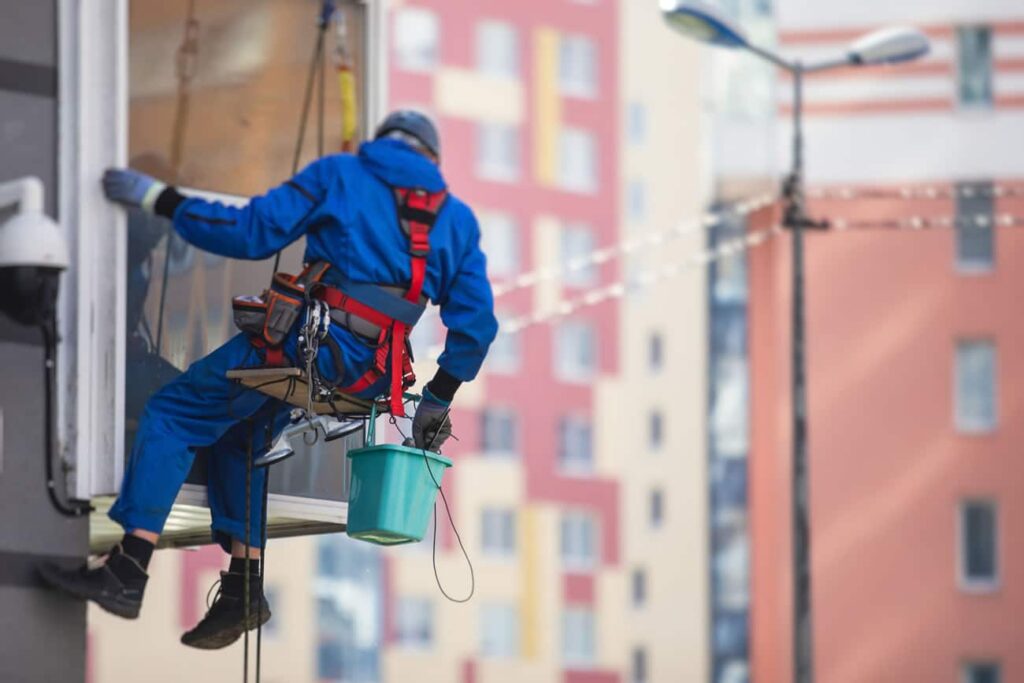
- Rope access solutions
This shift protects workers while also improving efficiency. Fewer setups, fewer restrictions, and fewer delays. Companies that ignore this change lose access to higher-value contracts.
The Growth of Contract-Based Work
The industry has steadily moved away from relying purely on domestic rounds. Commercial and contract work now plays a major role in building stable, predictable income. Schools, housing associations, office buildings, and retail units require regular cleaning schedules that can span months or years.
These contracts create consistency. Instead of chasing one-off jobs, businesses can build recurring revenue streams that support growth. Many companies now structure their entire model around this approach, using domestic work as a supplement rather than the core focus.
Contracts often include more than just window cleaning. Combined service agreements are becoming standard, covering additional elements such as cladding, signage, and external surfaces. This increases job value and reduces the need to constantly acquire new customers.
Technology Is Reshaping Operations
Manual systems are being replaced by software that controls every part of the business. Scheduling, invoicing, route planning, and customer communication are all handled through digital platforms.
This removes inefficiencies that used to limit growth. Instead of relying on memory or paper-based systems, businesses can track every job, every payment, and every customer interaction in one place. Route optimisation alone can cut hours of wasted travel each week, directly improving profitability.
Automation plays a major role. Reminders, invoices, and follow-ups are handled without manual input. This allows small teams to operate at a level that would have previously required far more staff.
Payment Methods Are Becoming Frictionless
Cash collection is disappearing. Customers expect simple, reliable payment methods that require no effort after the initial setup. Direct debit systems and card payments are now standard across most professional operations.
Monthly billing models are also becoming more common. Instead of charging per visit, businesses spread costs across the year. This creates predictable income while removing awkward payment situations. It also improves customer retention, as the service becomes part of a routine rather than a one-off expense.
Environmental Pressure Is Influencing Decisions
Environmental awareness has begun to shape the industry. Customers, especially commercial clients, are paying more attention to how services are delivered. The use of pure water systems already reduces reliance on chemicals, but expectations are going further.
Efficiency in water usage, reduction in waste, and environmentally responsible processes are becoming part of decision-making. Businesses that position themselves correctly gain an advantage in competitive tenders and larger contracts.
Service Expansion Is Increasing Job Value
Window cleaning businesses are no longer limited to glass. Expanding into related services has become a standard approach to increasing revenue per customer. Instead of completing one task and leaving, companies are offering broader solutions.
Common additions include:
- Gutter clearing
- Solar panel cleaning
- Pressure washing
- Cladding cleaning
This approach improves efficiency. The same visit generates more revenue, and customers are less likely to look elsewhere for additional services. It also strengthens long-term relationships.
Equipment Is Becoming More Advanced
Modern equipment is designed for reach, speed, and safety. Lightweight materials, longer poles, and improved filtration systems allow cleaners to access areas that were previously difficult or time-consuming.
High-level work has also evolved. Rope access and mechanical platforms are now widely used on larger buildings. These methods reduce setup time compared to traditional scaffolding and allow work to be completed faster with fewer disruptions.
The result is a more flexible industry where access limitations are reduced, and job completion times continue to improve.
Automation and Robotics Are Emerging
Robotic cleaning systems are beginning to appear, particularly in commercial environments. While not yet widespread, they signal the direction the industry is moving toward. Automation reduces reliance on manual labour and introduces consistency in repetitive tasks.
The more immediate impact is seen in business processes. Quoting systems, scheduling tools, and customer communication platforms are already automated in many operations. This allows businesses to scale without increasing administrative workload.
Professional Branding Is Changing Perception
The image of the industry has changed. What was once seen as an informal trade is now a structured service business. Companies invest in branding, presentation, and customer experience.
Branded vehicles, uniforms, professional websites, and organised communication systems create trust. This directly affects pricing. Customers are willing to pay more for reliability and consistency when it is clearly demonstrated.
Presentation is no longer optional. It is part of the service.
Competition Is Increasing, and Margins Are Tightening
Low entry barriers still exist, which keeps competition high. Basic services are easily replicated, leading to price pressure at the lower end of the market.
Businesses that compete purely on price struggle to grow. The focus has shifted toward differentiation through efficiency, service quality, and added value. Faster service, better communication, and broader offerings create separation in a crowded market.
The gap between low-end operators and structured businesses continues to widen.
Data-Driven Pricing Is Becoming Standard
Pricing is no longer based on rough estimates. More businesses are using structured models that consider multiple variables such as property size, access difficulty, location, and service frequency.
This approach improves consistency and protects margins. It also aligns with the growing use of online pricing tools and instant estimates. Customers expect clarity and speed, and businesses that provide both gain an advantage.
Standardisation also makes scaling easier. New staff can follow established pricing models without relying on experience alone.
The Direction of the Industry
The window cleaning industry is moving toward efficiency, safety, and structured growth. Pure water systems, digital tools, recurring revenue models, and service expansion define the current landscape.
Businesses that adapt operate faster, safer, and more profitably. Those that resist change remain limited by outdated methods and inconsistent income. The difference is no longer subtle. It is operational, financial, and long-term.
The trajectory is fixed. The only variable is whether a business aligns with it or falls behind.